About Shadcn Form Layouts Blocks
A form layout arranges the fields, labels, help text, errors and actions that collect information from a user, from a two field sign up to a five step product listing. These 22 shadcn form layout blocks cover account and profile settings, workspace and store configuration, onboarding wizards, checkouts and create forms for projects, campaigns and events.
Like the rest of our shadcn blocks, every form is built with React, TypeScript and Tailwind CSS on top of shadcn ui components such as Field, Input, InputGroup, Select, RadioGroup, Checkbox, Switch, Calendar and Combobox. Validation runs on react-hook-form with zod schemas, and each block ships with realistic defaults, live counters or previews, loading states and a success view, so the shadcn components already behave like a finished form.
Key Elements of a Form Layout
- Grouped sections: related fields collected under a heading, a fieldset or a tab, so long forms stay scannable.
- Visible labels and help text: labels linked to their inputs plus short descriptions for formats and limits.
- Inline validation: errors shown under the field that caused them, after the user leaves it.
- Smart inputs: prefixes, counters, masks, pickers and chip inputs that prevent mistakes before submit.
- Clear actions: a primary save or submit button, a way to discard changes and visible feedback while saving.
- Confirmation: a success view, saved message or summary that tells the user what happened.
Where and Why to Use Form Layout Blocks
Forms carry the most important moments of a product: sign up, payment, configuration and content creation. Getting validation, error states, responsive columns and save behavior right takes time, and these blocks give you that work ready to edit. Because they use the same shadcn components and Tailwind CSS tokens as the rest of your shadcn ui dashboard, they look consistent next to tables, dialogs and cards.
- Account settings: profile, password, notification and preference pages for signed in users.
- Workspace and store setup: organization details, members, branding, checkout and policy options.
- Sign up and onboarding: account creation and multi step wizards that collect company and plan details.
- Checkout and orders: payment, delivery and wholesale order forms with live totals.
- Create flows: new projects, campaigns, events, spaces and product listings.
- Feedback and surveys: short questionnaires with ratings, checklists and scales.
Form Layout Blocks in This Collection
Account and profile settings
- Form Layout 1: Use it for a full account page where users edit several areas and save everything once from the bottom of the screen.
- Form Layout 3: Fits marketplace or mentor profiles, where a completion score nudges people to fill every field.
- Form Layout 4: A staff or employee account page that keeps profile details and the password change in two separate cards.
- Form Layout 7: Suits freelancer or creator platforms where availability decides which pricing fields appear.
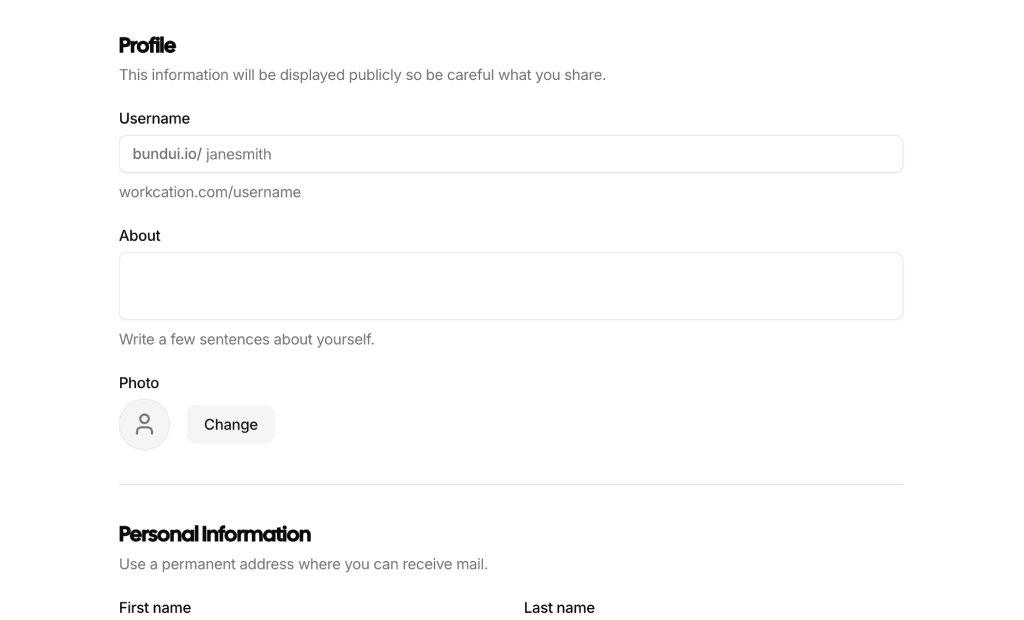
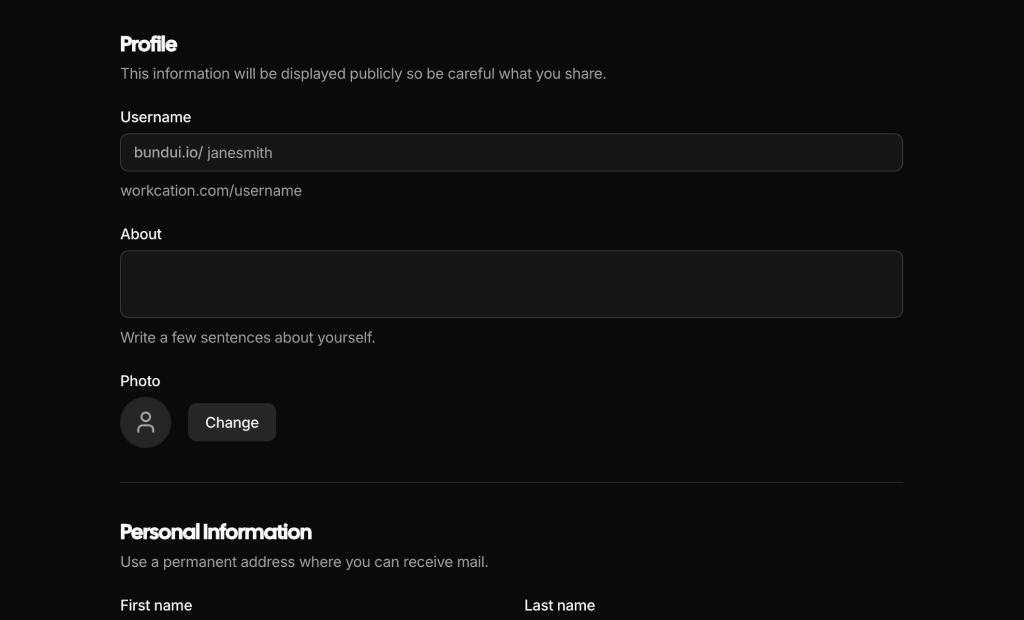
- Form Layout 14: A public page editor for products where each user has a shareable profile URL.
- Form Layout 19: Choose it for a complete settings area that includes security, notifications and account deletion.
- Form Layout 22: A medium sized profile split into three tabs when a single long page would feel heavy.
Workspace and store settings
- Form Layout 2: A one card setup for SaaS products that create a workspace and pick a plan in the same step.
- Form Layout 11: Use it in team chat or community apps to create a space and invite people, including guests by email.
- Form Layout 15: An admin settings page where organization, members and billing each save on their own.
- Form Layout 16: Fits e-commerce builders that configure a storefront, checkout rules and return policies.
Sign up, onboarding and wizards
- Form Layout 10: A compact sign up card for products that reserve a username at registration.
- Form Layout 20: A guided onboarding flow that collects account, company and plan details before the first login.
- Form Layout 21: Suits marketplaces where sellers list an item step by step and check everything on a review screen.
- Form Layout 13: The most complete product form, for shops that sell items with sizes, colors and per variant stock.
Checkout and orders
- Form Layout 6: A subscription upgrade or SaaS checkout with the order summary always in view.
- Form Layout 8: Fits B2B and ERP tools where sales staff enter orders in different currencies.
- Form Layout 17: A consumer checkout for gifts or deliveries that need a recipient, a delivery date and a message.
Create forms and surveys
- Form Layout 5: Use it after events, courses or workshops to collect ratings and comments in about two minutes.
- Form Layout 9: An agency or client portal intake form that turns a project name into a portal address.
- Form Layout 12: Fits marketing tools, with an AI draft button that fills the whole form as a starting point.
- Form Layout 18: A calendar app event form for scheduling a meeting with guests and an online or physical location.
Similar Block Categories
- Sign In Forms: pair account creation forms with login and password reset screens.
- Onboarding Screens: add welcome and setup screens around a multi step form.
- Modal Dialogs: move short create forms into a dialog instead of a full page.
- Tables: list the records that your create and edit forms produce.
- Checkout Page: see full store checkout layouts next to the payment forms here.
Accessibility
The forms use the shadcn Field components, so each FieldLabel is tied to its control with htmlFor and id, invalid controls receive aria-invalid, and errors appear in FieldError right below the field. Forms set noValidate and let zod produce readable messages. Several blocks announce changes politely: the save status in Form Layout 1, the status line in Form Layout 3, the username check in Form Layout 14 and the total in Form Layout 17 use aria-live or role=“status”. Password toggles in Form Layout 4, 10 and 19 expose aria-pressed, rule lists add sr-only “met” or “done” text, and tag inputs support Enter, comma and Backspace from the keyboard.
A few spots can be improved. The time window group in Form Layout 17 and the billing cycle toggle in Form Layout 20 have labels that are not linked to a control, so consider a fieldset with a legend. The dots that mark unsaved or invalid tabs in Form Layout 15 and 22 put an aria-label on a plain span, where visually hidden text would be read more reliably. Form Layout 22 marks required fields with an asterisk only, so adding aria-required to those inputs is a good idea.
Form Layouts FAQ
useForm through zodResolver from @hookform/resolvers, with mode set to onTouched so errors appear after a field is left. Messages render with the shadcn FieldError component and controls get aria-invalid. Cross field rules, such as matching passwords in Form Layout 4 or card checks in Form Layout 6, use refine or superRefine.useFileUpload hook from your hooks folder.onSubmit function that receives the validated values. In the demo it waits for a short timeout and then shows a success view or a saved message. Replace that delay with your fetch or server action call, and keep the reset call after a successful save so the dirty state clears.sm:grid-cols-2, so they stack into one column on phones. Label left layouts such as Form Layout 3 and Form Layout 9 switch to stacked labels below the md breakpoint, vertical tab navigation in Form Layout 15 and Form Layout 19 becomes a Select, and footers stack with full width buttons on small screens.